
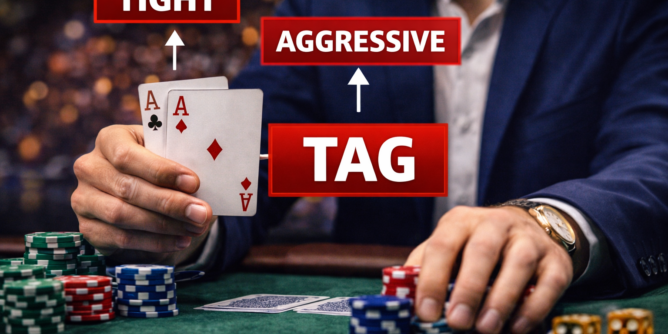
Why Tight-Aggressive Poker Is So Effective
If you look for one playing style that consistently works for beginners and intermediate players, tight aggressive poker stands out above the rest. It is simple enough to learn, disciplined enough to limit costly mistakes, and aggressive enough to apply pressure where it matters. That combination is the reason TAG poker is often recommended as the foundation of winning poker.
Many new players misunderstand what wins in poker. They focus on playing more hands, chasing big pots or trying to outplay opponents with flashy moves. In reality, most long term profit comes from doing the basics better than the table. Tight aggressive poker does exactly that. It reduces exposure to marginal situations while maximizing value when you are likely ahead.
TAG poker is not about being passive or waiting endlessly for premium hands. It is about selectivity paired with initiative. You enter pots with hands that perform well and then take control of those pots through betting and raising. This approach puts opponents under pressure and forces them to make mistakes, which is where your edge comes from.
Another reason tight aggressive poker is so effective is that it scales well. It works in low stakes online games, live cash games and even tournaments. While advanced players eventually add more layers, TAG remains the backbone of solid poker strategy.
What Is Tight-Aggressive (TAG) Poker?
Tight hand selection explained
The “tight” part of tight aggressive poker refers to hand selection, not passivity. Playing tight means you fold a large percentage of starting hands, especially from early positions. You avoid weak offsuit hands, dominated aces and speculative hands when conditions are not favorable.
Tight hand selection has several advantages:
- you enter pots with stronger ranges
- your postflop decisions become easier
- opponents have a harder time exploiting you
When you play fewer hands, your average hand strength increases. This reduces situations where you are unsure whether you are ahead or behind. For beginners, this alone dramatically improves results.
Playing tight does not mean playing scared. It means recognizing that not every hand is worth your time or money. Poker rewards patience. TAG poker embraces that reality instead of fighting it.
Aggression as a weapon, not recklessness
The “aggressive” part of tight aggressive poker is where many players get confused. Aggression does not mean bluffing constantly or betting every street regardless of logic. It means taking initiative when you choose to play a hand.
In TAG poker:
- you bet or raise instead of calling
- you apply pressure when you likely have the best hand
- you force opponents to respond rather than dictate action
Aggression accomplishes two key things. First, it builds pots when you are ahead. Second, it denies opponents the chance to realize their equity cheaply. Calling allows opponents to see cards. Betting makes them pay.
Importantly, TAG aggression is controlled. You are aggressive with purpose, not emotion. When conditions change, such as facing strong resistance or unfavorable board textures, you are willing to slow down or fold. This balance is what separates tight aggressive poker from reckless aggression.
TAG Poker vs Other Playing Styles
Understanding tight aggressive poker becomes easier when you compare it to other common styles.
TAG vs tight-passive
Tight passive players also select strong hands, but they fail to capitalize on them. They call too often and bet too little. This allows opponents to draw cheaply and outplay them later in the hand. TAG players avoid this by leading the action and extracting value early.
TAG vs loose-aggressive
Loose aggressive players enter many pots and apply heavy pressure. While this style can be effective in expert hands, it creates high variance and requires excellent postflop skills. For most players, especially at lower stakes, loose aggression leads to costly mistakes. TAG poker keeps aggression focused and selective.
The key difference is control. Tight aggressive poker gives you control over:
- when you enter pots
- how large the pot becomes
- how much risk you take
That control is why TAG poker remains the most reliable style for building solid fundamentals and long term consistency.
Core Principles of Tight-Aggressive Poker
To play tight aggressive poker well, you need more than just good starting hands. TAG works because it follows a small set of core principles that guide decisions before and after the flop. When these principles are applied consistently, they reduce guesswork and increase long term profitability.
Position and hand ranges
Position is one of the most important factors in poker, and TAG players use it aggressively to their advantage. The later your position, the more information you have, and the wider your playable range becomes.
In tight aggressive poker:
- early position ranges are narrow and strong
- middle position allows some expansion
- late position is where aggression increases
From early position, TAG players focus on premium hands because acting first postflop is difficult. From the button or cutoff, they open more hands and apply pressure to blinds and weaker players.
This structured approach keeps you out of trouble while still allowing you to exploit positional advantage. Playing the same hands from every position is one of the most common beginner mistakes. TAG poker avoids this by design.
Betting and raising instead of calling
A defining rule of tight aggressive poker is simple. When you choose to play a hand, you prefer betting or raising to calling.
Calling keeps pots small, but it also keeps opponents in the hand. Betting and raising accomplish more:
- they build pots when you are ahead
- they force opponents to make decisions
- they define ranges more clearly
TAG players call when necessary, not by default. Passive calling lines often lead to difficult river decisions and missed value. Aggression simplifies the game by pushing uncertainty onto your opponents.
This does not mean betting blindly. It means recognizing spots where initiative creates long term value.
Applying TAG Strategy Preflop
Most of your edge as a tight aggressive player is created before the flop. Strong preflop decisions prevent many postflop problems.
Opening ranges by position
TAG poker uses disciplined opening ranges. You do not limp. You enter pots by raising or folding.
General guidelines include:
- tighter ranges from early position
- wider ranges from late position
- awareness of players behind you
Opening strong hands consistently builds a tight image. Later, that image allows your aggression to succeed more often because opponents give your bets credit.
It is also important to adjust based on table dynamics. If players behind you are aggressive 3-bettors, tighten slightly. If blinds are passive, open more frequently from late position. TAG poker is structured, but not rigid.
3-betting with purpose
In tight aggressive poker, 3-bets are not random. They are used with clear intent.
Common reasons to 3-bet include:
- value against weaker opening ranges
- isolation of loose players
- denying equity to speculative hands
TAG players avoid excessive flat calling preflop. If a hand is strong enough to continue, it is often strong enough to raise. If it is not, folding is usually better than calling.
This disciplined approach keeps ranges strong and prevents opponents from easily exploiting your tendencies.
Postflop Play in TAG Poker
Postflop is where tight aggressive poker proves its strength. Because you arrive at the flop with stronger ranges, many decisions become more straightforward.
Continuation betting is a key weapon. When you raise preflop and see a favorable board, a well sized continuation bet often wins the pot immediately. Even when called, you retain initiative and control the pace of the hand.
Pot control is equally important. TAG poker does not mean firing every street automatically. When boards become dangerous or opponents show strength, slowing down is a sign of discipline, not weakness.
Strong TAG postflop play focuses on:
- betting for value when ahead
- folding when evidence suggests you are behind
- avoiding marginal hero calls
This balance between aggression and restraint is what allows tight aggressive poker to outperform more emotional or undisciplined styles over time.
Common TAG Poker Mistakes
Even though tight aggressive poker is a strong and reliable style, many players apply it incorrectly. These mistakes usually come from misunderstanding what “tight” or “aggressive” actually mean in practice.
Playing too tight and becoming predictable
One of the most common TAG mistakes is becoming too tight. Some players interpret TAG as only playing premium hands and folding everything else. While this avoids losses, it also limits profit.
When you play too tight:
- opponents steal your blinds relentlessly
- your aggression gets less action
- your range becomes easy to read
TAG poker requires selectivity, not fear. You still need to open wider in late position and take advantage of passive opponents. If you only play the very top of your range, you miss many profitable spots.
Failing to adjust to opponents
Another frequent mistake is playing the same TAG strategy against everyone. Tight aggressive poker is a foundation, not a fixed script.
Common adjustment failures include:
- bluffing stations who never fold
- slow playing against aggressive players
- continuation betting into unfavorable board textures
Good TAG players observe how opponents react. Against passive players, you value bet more. Against aggressive players, you tighten ranges and let them make mistakes. TAG poker works best when it adapts to the table.
When to Adjust or Deviate From TAG
Tight aggressive poker is ideal as a default style, but real games are dynamic. Knowing when to deviate is what separates solid players from strong ones.
One clear reason to adjust is table composition. If the table is extremely tight, opening more hands in late position becomes profitable. If the table is very loose and aggressive, tightening up further can increase value.
Another adjustment point is stack depth. TAG works best with medium stacks. Very deep stacks allow for more speculative hands, while very short stacks require more push fold decisions.
You should also adjust based on opponent tendencies:
- bluff less against calling stations
- apply pressure to weak tight players
- reduce aggression against strong, balanced opponents
The key is understanding that TAG poker is a baseline strategy. It gives you structure and discipline. Deviations should be intentional, not emotional.
Conclusion: TAG Poker as a Long Term Winning Style
Tight aggressive poker remains one of the most effective and reliable strategies in poker. It works because it aligns with how the game actually rewards players. Strong starting hands, positional awareness and controlled aggression create situations where opponents make more mistakes than you do.
TAG poker is not flashy and it is not designed to win every pot. It is designed to win the right pots. By avoiding marginal situations and pressing advantages when they appear, TAG players build consistency and confidence.
As your skills grow, you will naturally add layers to your game. But even at higher levels, tight aggressive principles remain at the core of winning poker. Mastering TAG poker is not the end of the journey, but it is one of the best places to start.
FAQ
Is tight aggressive poker good for beginners?
Yes. It simplifies decisions, reduces costly mistakes and builds strong fundamentals.
Can TAG poker work in tournaments?
Yes, especially in early and middle stages. Adjustments are needed as stacks shorten.
Is TAG poker too predictable?
Only if applied rigidly. Proper position based play and adjustments prevent predictability.
Should TAG players bluff often?
Bluff selectively. Aggression should be logical, not automatic.
Do I need advanced math to play TAG poker?
No. Understanding position, hand strength and opponent tendencies is enough to start.
