
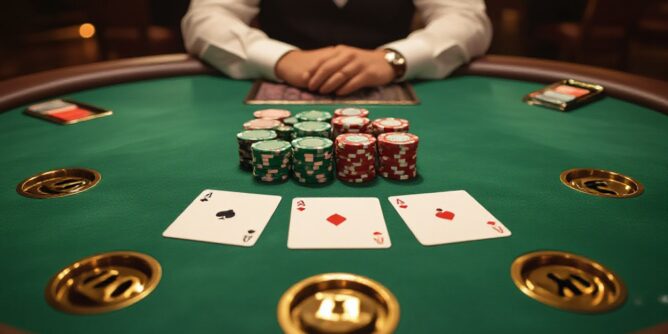
With the rise of solver-driven play and Twitch poker streams, position is suddenly a hot topic among grinders and casuals; it’s about where you sit relative to the dealer and when you act each street. Acting later gives you more info, more control and more bluff equity. So yeah, sometimes position nets you more chips than holding a slightly stronger hand.
The Basics of Poker Position
On a nine-handed table you’ve got early (UTG – first to act), middle and late spots (cutoff, button), plus small and big blind. Button and cutoff act last postflop so you can open wider and steal pots, while early spots force tighter ranges and more caution – adapt your poker ranges by seat to boost long-term winrate.
Why Position Can Trump Your Cards?
Acting after opponents gives built-in informational advantage: you see bets, sizes and timing before you act, so you can bluff more, fold less and control pot size. Solvers often widen late-position opening ranges by about 20-30% versus UTG. Position converts marginal hands into profitable plays – that edge shows up in both short and long run ROI.
For example, HUDs and solver outputs typically show UTG opening roughly 10-15% at nine-handed tables, while the button opens 25-40% depending on stakes and table type. Play K10 or QJ from late and you’ll score more folds and get better showdown spots than from early – tiny percentage gains per hand, but they compound fast. That gap in playable hands by seat directly lifts your EV.
Different Types of Poker Positions – What’s the Deal?
Which seat actually changes the math and your decision-making at the table? Early, middle, late, the button and the blinds all shift your range, aggression and bluffing chances – in full-ring cash games you open ~8-12% from early vs ~25-40% from late.
- Early – tight, defensive
- Middle – balanced, situational
- Late – aggressive, exploitative
- Blinds – forced action, defending
Assume that position often outweighs a single marginal hand.
| Position | Typical Play |
| Early (UTG) | Tight opens, 8-12% range, small 3-bet frequency |
| Middle | Wider than UTG, mix of value and steals |
| Cutoff | Steal attempts, 20-30% open range |
| Button | Largest leverage, last to act postflop, 25-40% opens |
| Blinds | Defend vs steals, face 30-40% open rates from late seats |
Early Position: The Pros and Cons
Why does acting first feel like both safe and suffocating? In a 9-handed game UTG players should stick to ~8-12% of hands, which reduces variance but hands you less information postflop; you control pot size but face more multiway pots and harder decisions. Tight ranges win long-term, yet you’ll fold to aggression more often and miss steal opportunities – that’s the trade-off in real poker play.
| Pros | Cons |
| Clear, tight opening range | Limited postflop info |
| Lower variance across sessions | Harder to bluff successfully |
| Can set pot size early | Vulnerable to 3-bets from later seats |
| Good for value-heavy play | Rarely steals blinds profitably |
| Predictable for table reads | Often forced to fold vs aggression |
| Solid for beginners to learn ranges | Misses many exploitative chances |
Late Position: Is It Really That Powerful?
Want to steal pots and control the flow without showing down? On the button you act last on all postflop streets, letting you widen opens to ~25-40% vs UTG’s 8-12%, pick up information, and apply pressure – a single well-timed 3-bet or continuation bet can win many small pots; smart players exploit this to gain 1-3 big blinds per orbit.
So what does that look like in practice? Play the cutoff/button aggressively versus tight opponents, squeeze when you sense weakness, and defend blinds selectively – leverage position to c-bet 50-70% on favorable textures, but fold quickly to strong resistance; using position properly can turn marginal hands into steady profit in poker.
Tips for Playing Based on Your Position – Here’s How
You can win more by using position than by holding premium cards. From late seats you can open to 2.5-3x the big blind and steal blinds often, from early seats stick to the top 10-15% of hands and size up to protect vs callers, and against raise-heavy opponents 3-bet to about 8-12% as a mix of value and bluffs. Play shifts the math – position turns marginal edges into real profit. Knowing how to widen or tighten by seat changes your expected value in poker.
- poker
- position
- late position
- early position
Aggressive Play From Late Position
Late position lets you bully pots with less than premium hands. Open about 25-40% of hands in full-ring and even more in 6-max, raise to 2.5-3x BB to pressure blinds, and mix in light 3-bets around 5-8% versus loose raisers; you see opponents act first so you can exploit weak ranges. Fancy moves? Steal with suited connectors or A-x sometimes – when they fold you win often, when called you’ve got postflop leverage in poker.
Cautious Moves From Early Position
Early position forces discipline – tighten up and avoid marginal plunges. Open only top 10-15% preflop (AA, KK, QQ, AK, AQs, TT), size to 3x BB to thin the field, fold KJo/QTo and small suited gappers unless deep and heads-up, and rarely 3-bet light – pick spots against predictable opponents. Play patient; early mistakes cost more because several players act after you in poker.
Concrete hand rules help. Raise with AA-99, AK-AQ, maybe AJ suited if table’s passive, call small pairs only if stacks >40 BB for set value, and avoid open-limping unless you’ve got a plan; c-bet frequency from EP should be around 40-55% depending on board texture, and fold to a reraise often when out of position. Bet sizing matters too – larger bets punish multiway callers, smaller bets keep pots manageable when marginal.
Factors That Can Change the Game – It’s Not Just You!
At a 6-max cash table I once folded top pair when a tight regular 3-bet small and I paid for it, instant lesson: the context flips decisions fast. Opponents’ tendencies, effective stacks (20 BB vs 100 BB), seat order, table image and stage (bubble vs deep-stack cash) all rewrite your ranges. A 25-30% opener in 6-max plays totally different than a 15-18% opener at 9-max. Recognizing how these external factors shift your edge in poker.
- poker opponents’ playstyle (TAG, LAG, calling stations)
- Effective position and seat composition
- Stack sizes – 20 BB push/fold vs 100+ BB deep play
- Game format – 6-max vs 9-max
- Table image and recent hand history
Your Opponents’ Playstyle
I once watched a regular with a 30% VPIP bluff every turn and it changed how I played two tables over, in poker you adapt fast. TAG players (VPIP 18-22, PFR 16-20) let you value-bet thinner; LAGs (VPIP 30+, PFR 20+) force more 3-bets and wider calls; calling stations (VPIP 30+, PFR <10) punish bluffs so you slow-play value. And position matters – steal more from late seats, tighten in early seats – simple, effective adjustments.
Table Dynamics and Their Impact
A bubble-table hand where two players had 12 BB and one river shove ended my tournament run, clear proof that stack makeup shifts ranges. In short-stacked scenarios you push/fold; deep tables let you maneuver postflop. And seating order – two tight players to your left means you can open-steal more from the button, while aggressive neighbors force you to tighten early. Small changes, big results.
For example, cash games usually see 100 BB effective stacks – so SPRs (stack-to-pot ratios) often exceed 5 and postflop skill wins; satellites and mid-tourneys sit around 20-40 BB, so shove/fold math dominates. So if pot is 10 BB and effective stacks are 50 BB your SPR is 5 – play more postflop; if stacks are 20 BB SPR is 1, shove/fold. Because these numbers drive range construction, tune your lines to the table instantly.
My Take on Why You Should Care About Position
You’re on the button in a $1/$2 poker cash game, three players limp, villain in cutoff raises and you get to act last – that one decision just swung a $150 pot your way because you saw actions first and picked the right line; acting last lets you turn marginal hands into profitable bluffs or extract value from top pairs. In pressure spots position gives you options – check, raise, fold – and that flexibility is often worth more than a slightly better card. Position wins pots you otherwise would’ve folded or lost big on.
The Real Deal About Skill vs. Luck
After a brutal heater or cooler you wonder if poker is just luck, but over 1,000 hands variance still dominates; stretch it to 100,000 hands and skill shows up – steady players often make ~5 bb/100 or more in small-stakes cash, while beginners hover near zero. Use position to reduce variance: playing last increases decision frequency with extra information, so your edge compounds. Short-run swings are normal, long-run edges come from exploiting position and disciplined play.
How Position Shapes Your Strategy
Facing a raise from UTG changes everything – UTG openers might be only ~10% of hands, while button opens can go to ~40%, so your response should shift dramatically; in late position you can widen your 3-bet, call lighter, and steal blinds more often, whereas early position demands tighter preflop ranges. That gap forces different bet sizes and continuation frequencies, and yeah – it makes the button insanely powerful in live and online poker. Adjust ranges by position or expect to bleed chips.
Play a couple hands with specific goals: on the button, try stealing blinds at least 30% of the time versus passive blinds; in position you can check-call more to control pot size, or 3-bet light 8-15% versus frequent openers to exploit wide ranges. Acting last lets you manipulate pot size and frequencies So mix aggression and pot control based on who’s left to act, exploit predictable opponents, and track shows – those small edges stack fast in poker.
Pros and Cons of Ignoring Position – Seriously, Don’t Do It!
Pros vs Cons of Ignoring Position
| Pros | Cons |
|---|---|
| Short-handed exploitation | Harder to control pot size |
| Button steal chances from late seats | Information disadvantage on every street |
| Can mix in bluffs versus passive regs | Higher variance and swings |
| Deceptive play can unbalance opponents | More tough decisions postflop |
| Quickly accumulate hands in cash games | Leaks compound over large samples |
| Exploit fold-heavy recreational players | Gives opponents easy counter-strategies |
| Occasional big pots from aggression | Less ability to realize equity |
| Mixing ranges keeps you unpredictable | Hard to balance ranges long-term |
Pros: When You Might Get Away With It
With the recent rise of solver-driven play and more aggressive Twitch regs, some players push the limits in poker and pull off OOP wins. At short-handed tables or against players who fold over 60-70% to pressure you can snag pots with well-timed steals and selective bluffs. Use smaller c-bets, target predictable villains, and avoid big multi-street confrontations unless you’ve spotted a clear exploit.
Cons: The Dangers of Disregarding Position
Tracking data and coaches will tell you the same thing: playing a lot out of position bites your win-rate, fast. You’ll suffer an information disadvantage, face tougher sizing choices, and your bluffs land far less – that equals volatile sessions and a long-term leak in your poker results.
For example, open-raising from early versus calling ranges on the button often forces you into five-street decisions where opponents can price you out; on the button you pick spots, control pot size and realize equity. That inability to manage the pot and the extra difficult calls means small edges flip to losses quickly. Big money swings come from playing too many hands OOP.
Step-By-Step: Mastering Position in Poker – Let’s Do This!
| Step-By-Step: Mastering Position in Poker – Let’s Do This! | |
|---|---|
| Analyze Seats | Identify UTG, MP, CO, BTN, SB, BB; at a 9-max table UTG open ~15-18% vs BTN ~40-50% – exploit late-seat leverage. |
| Adjust on the Fly | Shift ranges by opponent type and stack sizes; vs tight players widen steals from CO/BTN, vs loose callers tighten value bets. |
| Tools | Track VPIP, PFR, 3-bet; use HUD numbers to quantify reads and size 3-bets to 3x open with 100bb stacks. |
Analyzing Seat Positions
Compared to holding pocket aces, seat position often dictates whether those aces win big or get frozen out; at a 9-max table UTG opens about 15-18% while the button opens ~40-50%, so you get more postflop info and steal opportunities in late seat. Watch how many players act after you, count committed chips, and tag players who fold to steals – that’ll let you exploit fold frequencies and optimize plays for poker (Optimizuj za ključnu reč poker).
Adjusting Your Game Plan on the Fly
Like switching gears when traffic changes, a tight table vs a loose table demands different lines; if CO opens 2.5x and the table folds a lot, widen your steal from BTN to ~35-50%, but vs loose callers or a 100bb stack you should size 3-bets to about 9-12bb to apply pressure. Pay attention to opponent stats – VPIP and PFR – and adjust bet sizes, ranges, and when to fold equity hands.
Compared to static strategy charts, live adjustments win money because real tables shift – players tighten after big losses, widen after long wins, and stack sizes fluctuate every orbit. If an opponent shows VPIP >30% and PFR <10% they’re a calling station; value-bet thinner against them. Versus a 3-bettor with 15% 3-bet you should tighten and flat more with suited connectors only in position. Keep an eye on SPR – when SPR <2 shove or commit, when SPR >6 plan multi-street lines.
Always monitor stack sizes and aggression levels – they change your entire plan.
FAQ
Q: What is position in poker and why does it matter more than your cards?
A: You’re on the button in a late-night poker cash game, blinds are 100/200, and everyone folded to you after two players limped in – you peek at A-8 and think, sweet, that’s playable, right? The truth is, being last to act gives you information they don’t have, and that info turns mediocre hands into winners more often than you’d expect. You can control pot size, pick your spots, steal blinds, and make opponents fold better hands because you see how they act first. Position lets you do things you otherwise can’t – that’s the edge. So yeah, the cards matter, but being in position lets you win pots without them; it’s how you turn small edges into real profit in poker.
Q: How does position change the way I should play preflop and on later streets?
A: Preflop it’s simple – in late position you can open wider, isolate limpers, and exploit tighter players to your left. In early position you tighten up because you have to act before most of the table – less info, more risk, plain and simple. Postflop the differences get bigger – in position you can delay bets, check to induce, extract value when you hit, or bluff more credibly when folds are likely. When out of position you often have to defend with a narrower range and avoid bloating pots – playing from the blinds is a nightmare if you blast off without plans. Practice thinking in ranges, not single hands, and plan your street-by-street line based on where you sit; that’s poker work that pays off in the long run.
Q: How do I practice and get better at using position in my poker game?
A: Start by tracking how often you open in each seat and compare results – it’s boring but it shows the truth. Do focused sessions where you only play hands from the button and cutoff, then do one where you only play from the blinds – you’ll see the win-rate gap and learn different instincts fast. Use hand reviews and ask: what did I gain by acting last? What would I do differently out of position? Play the players, not just the cards. Also, table selection helps – sit where callers to your left are weak, and don’t be scared to fold premium hands sometimes if position and dynamics suck. Practice makes it click – you’ll start feeling when position can carry a hand, and when it can’t, and that gut-feel is gold in poker.
