
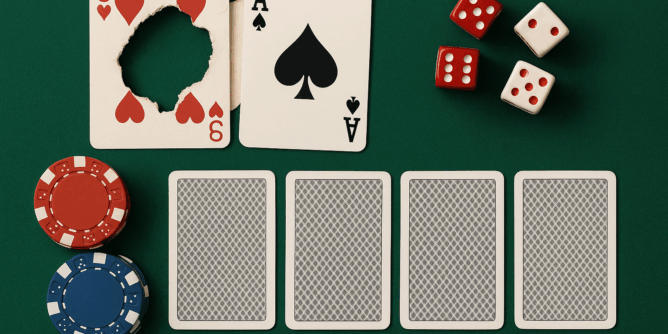
Poker Leak Finder – The Key to Long-Term Improvement
Every serious poker player eventually learns one fundamental truth: long-term success isn’t just about winning big pots — it’s about fixing the small mistakes that silently drain your bankroll over time. These small, often unnoticed errors are called leaks.
A leak is a recurring flaw in your game — a habit or decision pattern that consistently costs money. You might be entering too many pots out of position, overvaluing mediocre hands, or tilting after a bad beat. None of these mistakes will ruin you in one night, but over hundreds or thousands of hands, they create a slow, steady leak in your results.
The problem with poker leaks is that most players don’t even realize they have them. Because poker is a complex mix of skill, math, psychology, and probability, it’s easy to justify poor decisions as “bad luck.” But variance only hides mistakes for so long. Eventually, patterns emerge — and players who take time to study those patterns are the ones who improve fastest.
That’s where leak finding comes in. Leak finding is a systematic process of analyzing your poker sessions, identifying where you’re losing expected value (EV), and making strategic adjustments to close those gaps. It’s the bridge between being a good player and becoming a consistently profitable one.
Think of it like repairing a ship. You can’t sail far if your hull keeps taking on water — even small leaks will sink you eventually. A disciplined player learns to patch these leaks early, before they grow into serious weaknesses.
In this guide, we’ll explore how to spot leaks, the ten most common mistakes players make, and practical fixes for each one. Whether you play online or live poker, this process will sharpen your strategy, boost your win rate, and help you think like a professional.
How to Identify Leaks in Your Poker Game
Before you can fix a leak, you have to find it. Most players know they’re “doing something wrong,” but they struggle to pinpoint exactly what. That’s because poker has so many moving parts — from preflop ranges and bet sizing to emotional control and game selection. The good news is that leaks can be detected using data, structure, and self-reflection.
Here’s how to start your own leak-hunting process:
1. Review Your Hand Histories Regularly
If you play online poker, your hand histories are a goldmine of information. Modern tracking tools like PokerTracker, Hold’em Manager, and Hand2Note record every action you take — what hands you play, from which position, how often you raise, call, or fold. Reviewing these hands objectively is the first step to spotting patterns.
Look for hands where you lost more than expected or felt unsure about your decision. Ask yourself:
- Was my range too wide here?
- Did I play out of position unnecessarily?
- Did I miss value on the river?
By replaying and tagging hands after every session, you’ll begin to notice recurring spots where you lose money. Those patterns are your leaks waiting to be fixed.
2. Use HUD Stats and Poker Tracking Data
Statistical analysis gives you an objective view of your performance. Your HUD (Heads-Up Display) shows key metrics that reveal tendencies and imbalances in your game.
Here’s a quick reference table for interpreting core poker stats:
| Stat | Meaning | Healthy Range | Common Leak |
|---|---|---|---|
| VPIP (Voluntarily Put $ in Pot) | How many hands you play | 18–24% (6-max), 12–18% (full ring) | Playing too many hands |
| PFR (Preflop Raise) | How often you raise preflop | 14–20% | Calling too much preflop |
| 3-Bet % | How often you re-raise | 5–8% | Not aggressive enough |
| Aggression Factor (AF) | Ratio of bets/raises to calls | 2.5–4.0 | Too passive postflop |
| WTSD (Went to Showdown) | % of hands you take to showdown | 22–28% | Calling too often with weak hands |
If your VPIP is high and your PFR is low, for instance, that’s a red flag that you’re calling too often instead of raising — a classic losing habit.
Conversely, if your Aggression Factor is below 2, you’re likely missing profitable bluff spots.
HUD stats don’t lie. Numbers make your leaks visible — you just need to interpret them correctly.
3. Track Your Win Rate by Position
Position is one of the most powerful concepts in poker, and yet, many players never check how much they actually earn (or lose) from each seat.
In your tracking software, sort your results by position — UTG, MP, CO, Button, SB, BB.
If you’re losing heavily from the blinds or early position, that’s normal. But if you’re losing money on the Button or Cutoff, something is wrong. Those are the most profitable positions in poker due to informational advantage, and consistent losses there usually indicate bad range selection or poor postflop decisions.
Analyzing positional performance helps you pinpoint structural leaks in your strategy, not just isolated mistakes.
4. Compare Yourself to Winning Players
Most tracking software allows you to import or compare your data to database averages of winning players at your stake level. This benchmarking reveals where your game deviates from the norm.
For example, if most winning players have a 3-bet percentage of 7%, but yours is only 3%, you’re likely missing opportunities to apply pressure. If your WTSD is above 30%, you’re probably calling down too light.
This kind of comparison turns intuition into evidence. Once you see where your stats differ, you can work on bringing them closer to proven winning ranges.
5. Ask for Feedback
Sometimes leaks are invisible from your own perspective. Sharing your hands or stats with other experienced players, coaches, or study groups can uncover blind spots you didn’t know existed.
A second pair of eyes often spots emotional or strategic biases that data alone can’t.
For instance, you might be folding too often in spots where you fear aggression or bluffing in situations where you subconsciously chase action. Discussing hands with others helps you stay accountable and grounded in logic, not emotion.
6. Track Your Emotional Patterns
Not all leaks are mathematical — some are psychological. If you notice that you lose most of your bankroll after a few bad beats, you’re not suffering from bad luck, but from tilt.
Keeping a journal of your sessions, noting when you played your A-game and when emotions interfered, is an underrated yet powerful leak finder.
Poker is as much about mental discipline as strategy. Recognizing your emotional leaks — impatience, frustration, overconfidence — is the first step to controlling them.
Ten Common Poker Mistakes and How to Fix Them
Even experienced poker players carry hidden leaks in their game. Some come from misunderstanding math, others from emotion or habit. Below are the ten most frequent — and costly — mistakes that separate break-even grinders from consistent winners.
1. Playing Too Many Hands
The Leak:
Beginners love action. They enter pots with weak hands “just to see a flop,” hoping to get lucky. The problem is that playing too many hands from bad positions creates long-term negative expected value (EV). Weak starting hands often lead to difficult postflop spots and dominated holdings.
The Fix:
Tighten your ranges — especially out of position. Use preflop charts to discipline your hand selection. If you wouldn’t raise it on the button, you definitely shouldn’t play it under the gun. Fewer hands = fewer marginal spots = higher win rate.
2. Calling Too Often Instead of Folding
The Leak:
Many players are curious callers. They hate folding because they don’t want to be bluffed. This results in calling too much with marginal hands and losing at showdown.
The Fix:
Embrace folding as a weapon. Use pot odds and range logic to make your decisions. If your opponent’s line doesn’t make sense, sure — call. But if their aggression matches value-heavy ranges, folding saves you money. Remember: every chip you don’t lose is profit.
3. Ignoring Position
The Leak:
Position is power in poker. Players who act last have the advantage of seeing everyone else’s decisions before making their own. Yet many amateurs still open too wide from early position or call raises from the blinds with speculative hands.
The Fix:
Build your strategy around position. Play tight from early seats and wide from the button. In multiway pots, prioritize position over hand strength — a mediocre hand in position often beats a strong one out of position.
4. Overvaluing Top Pair
The Leak:
You hit top pair and assume you’re ahead — so you keep calling or betting without thinking about your opponent’s range. This leak is especially common in small stakes online poker, where players can’t fold strong but second-best hands.
The Fix:
Evaluate relative hand strength, not absolute. Consider board texture, opponent aggression, and stack depth. Top pair is great against one caller, but it’s often crushed in multiway pots or after heavy 3-betting. Learn to let go when the story doesn’t fit.
5. Failing to Adjust to Opponents
The Leak:
Some players treat every table like it’s a solver simulation — playing rigidly according to charts. But poker isn’t played in a vacuum. Different opponents require different strategies.
The Fix:
Adapt dynamically. Against loose-passive players, value bet relentlessly. Against maniacs, trap with strong hands. Against tight regulars, exploit with steals and bluffs. Always ask: Who am I playing against, and what do they hate most?
6. Not Managing Your Bankroll
The Leak:
Even skilled players go broke without proper bankroll management. Playing stakes that are too high for your roll exposes you to variance that can wipe you out.
The Fix:
Follow conservative bankroll rules. For cash games, keep at least 30–50 buy-ins for your limit. For tournaments, 100+ buy-ins is safer. Never sit in a game you can’t emotionally or financially handle losing. Treat your bankroll like a business asset — not gambling money.
7. Emotional Tilt
The Leak:
Tilt is the silent killer of profit. You take a bad beat, lose focus, and start making impulsive calls or bluffs out of frustration. One tilted session can erase weeks of solid play.
The Fix:
Develop emotional control routines.
- Take breaks after big losses or bad beats.
- Use mindfulness or breathing exercises to reset.
- Set stop-loss limits for your sessions.
Remember: poker is a mental endurance game. Your ability to manage emotions determines how high you can climb.
8. Bluffing Too Much or Too Little
The Leak:
Some players bluff every hand like it’s a movie scene. Others never bluff at all, becoming predictable. Both extremes are leaks.
The Fix:
Balance your aggression.
- Bluff in spots where your story makes sense (e.g., missed draws on coordinated boards).
- Avoid bluffing calling stations — it’s wasted money.
- Track your Aggression Factor (AF) — if it’s below 2, you’re too passive; above 5, you’re overbluffing.
Good poker is about credible aggression, not blind bravado.
9. Neglecting Hand Reviews
The Leak:
Many players finish a session and move on without reflection. This leads to repeating the same mistakes endlessly. If you’re not reviewing hands, you’re not learning.
The Fix:
After every session, mark hands where you felt uncertain. Review them with tracking software, poker forums, or a coach. Focus on decision quality, not results. Did you make the correct play based on information available? Over time, this habit compounds into mastery.
10. Playing Without a Plan
The Leak:
You open your poker client, join a table, and start clicking buttons. No warm-up, no focus, no clear objectives. This “autopilot mode” causes massive EV loss over time.
The Fix:
Approach poker like a professional.
- Set clear session goals: focus on one leak at a time.
- Review preflop charts before playing.
- Take notes on regular opponents.
- End sessions when your concentration drops.
A focused hour of deliberate play beats five hours of distracted grinding. Structure builds discipline — discipline builds profit.
Bonus Tip: Don’t Fix Everything at Once
Trying to correct all your leaks simultaneously is overwhelming. Pick one or two leaks and work on them for several weeks. Track your progress, monitor results, and move on only when you’ve internalized the change. Poker improvement is a long game — focus on sustainable growth, not instant perfection.
Summary of Key Leaks and Fixes
| Leak | Core Issue | Quick Fix |
|---|---|---|
| Playing too many hands | Lack of discipline | Tighten ranges |
| Calling too often | Fear of folding | Use pot odds and EV |
| Ignoring position | Acting first | Prioritize late position |
| Overvaluing top pair | Range blindness | Learn to fold marginal hands |
| Not adjusting | Static playstyle | Exploit opponents dynamically |
| Poor bankroll management | Overexposure to risk | Set strict buy-in limits |
| Emotional tilt | Loss of control | Take breaks and set stop-loss |
| Bluff imbalance | Predictability | Balance aggression |
| No hand review | Repeated mistakes | Analyze and reflect |
| No game plan | Lack of focus | Prepare before every session |
Each of these leaks chips away at your win rate, but every fix adds long-term equity. Once you start patching them systematically, you’ll notice something powerful: your decisions become more confident, your results more stable, and your sessions more enjoyable.
Poker improvement isn’t about perfection — it’s about progress. Every leak you fix is another step toward playing your A-game more often.
Conclusion: Turning Leaks into Lessons
The difference between a break-even grinder and a long-term winner in poker isn’t luck — it’s awareness. Every player has leaks, but only disciplined players find and fix them.
By identifying your biggest weaknesses — whether strategic (like playing too many hands), technical (like misjudging pot odds), or mental (like tilt) — you turn every mistake into a lesson.
Leak finding isn’t a one-time task; it’s an ongoing process.
The best players in the world still review hands, question decisions, and tweak strategies after every session. That’s what keeps them ahead.
If you treat poker as a skill-based discipline rather than a gamble, improvement becomes inevitable. Every fixed leak increases your edge, every review sharpens your instinct, and every lesson compounds into confidence.
Poker rewards consistency, not perfection. Start with one leak today — fix it, measure it, and watch how your bankroll responds.
FAQ – Frequently Asked Questions
1. What is a poker leak?
A poker leak is a recurring mistake that consistently costs you money — for example, calling too often, bluffing too little, or ignoring position. Leaks may be technical or psychological, but they always reduce your long-term expected value (EV).
2. How can I find leaks in my online poker game?
Use hand tracking software like PokerTracker or Hold’em Manager to analyze your stats. Compare them to winning player averages. If your numbers deviate significantly, that’s where your leaks are hiding.
3. How often should I review my hands?
Ideally after every session, but at least once a week. Consistent hand review builds awareness and prevents bad habits from taking root.
4. Can emotional tilt be completely eliminated?
Not entirely — even professionals experience it. The goal isn’t to avoid tilt, but to recognize it early and stop playing before it affects your decisions. Building mental discipline reduces the impact dramatically.
